
Quantum Technician: Pathways to an Exciting Career in Tomorrow’s Workforce
The rapidly expanding quantum industry will create thousands of jobs in Colorado. Here’s what you need to know.
Author: Emily Griffith Career Services Team
Date: October 2026
The future is here, and Colorado is on the cutting edge. As quantum technology continues to move beyond theoretical Ph.D. topics in research labs to real-world applications in industries such as cybersecurity, healthcare, national security, climate and energy, advanced materials and manufacturing, Emily Griffith Technical College is preparing students for a workforce poised to expand rapidly in the coming years. In fact, industry leaders in Colorado expect to create more than 10,000 quantum-related jobs by 2030, 80 percent of which will not require an advanced degree, meaning you don’t need a Ph.D. in theoretical physics to work in quantum.
Emily Griffith is leading the charge to meet the growing demand for technician roles in quantum with its brand-new Quantum Technician program, which will equip students with the hands-on experience and scientific understanding needed to find their career path in a number of exciting fields.
What Does a Quantum Technician Do?
Quantum computing and device manufacturing cannot be done without the use of specialized, highly sensitive equipment. Quantum technicians apply their training and knowledge to varied tasks including:
- Assembling and troubleshooting ultra-high vacuum systems
- Calibrating precision photonics and laser arrays
- Managing and supporting the cryogenic cooling systems essential for quantum processors
In Emily Griffith’s Quantum Technician program, students will receive hands-on training with specialized equipment, building and using tools such as single photon generating lasers and crystals, electronic circuits and laser tweezers. They will also become quantum conversant, gaining an understanding of the science behind quantum technology so they know what questions to ask and how to solve problems in real-world scenarios on the job. As the quantum industry evolves and new applications emerge, graduates with quantum conversance will have the adaptability needed to meet the demands of future developments.
Career Pathways and Job Opportunities in Quantum
As new applications for quantum networking, sensing and computing technologies continue to develop, the list of adjacent industries will expand. Here are several established jobs that use quantum technician skills:
- Calibration technologist or technician
- Cleanroom operator for manufacturing
- Cryogenic quantum hardware technician
- Electrical and electronics installer, technologist or repair technician
- Electro-mechanical and mechatronics technologist or technician
- Industrial engineering technologist or technician
- Lab technician or research assistant
- Mechanical engineering technologist or technician
- Optical assembly technician
- Photonics technician
- Soldering technician in an electronics lab
The Quantum Technician program offers students the training to forge a career path in all of these roles, plus the knowledge to adapt and thrive in quantum jobs that haven’t even been created yet.
Emily Griffith’s Quantum Technician Program
So, what can students expect from the program?
Though students will learn the math and scientific concepts behind quantum technology, the Quantum Technician program focuses on hands-on learning using real equipment rather than the theory a student might learn in a traditional university course.
During the 12-week program, students will learn concepts including quantum mechanics, information theory, electronics, vacuum systems, mathematics, optics, spectroscopy and computer programming, which they will apply on actual equipment used in the field in exercises that replicate real-world tasks done by quantum technicians. Qualified instructors provide one-on-one instruction as well as group lessons as part of the curriculum.
Students will spend most of their time in the program developing their skills in the lab during hands-on training exercises, with lessons focused on:
- General optics and laser tweezers
- Interferometry electronic circuits
- Quantum cryptography and spectroscopy
- Fiber optics, quantum optics and magneto optical traps
In addition to the technical skills learned through hands-on equipment training, students will have the opportunity to hone soft skills such as structured problem solving, composition of technical documents, and collaboration through planning and completing complex development projects as a team.
By the end of the program, students will have developed quantum conversancy—fluency and understanding of different types of quantum technologies—which will allow them to apply their knowledge to a wide range of quantum technician workforce scenarios and ask the questions that lead to successful results in a lab or high-tech manufacturing environment.
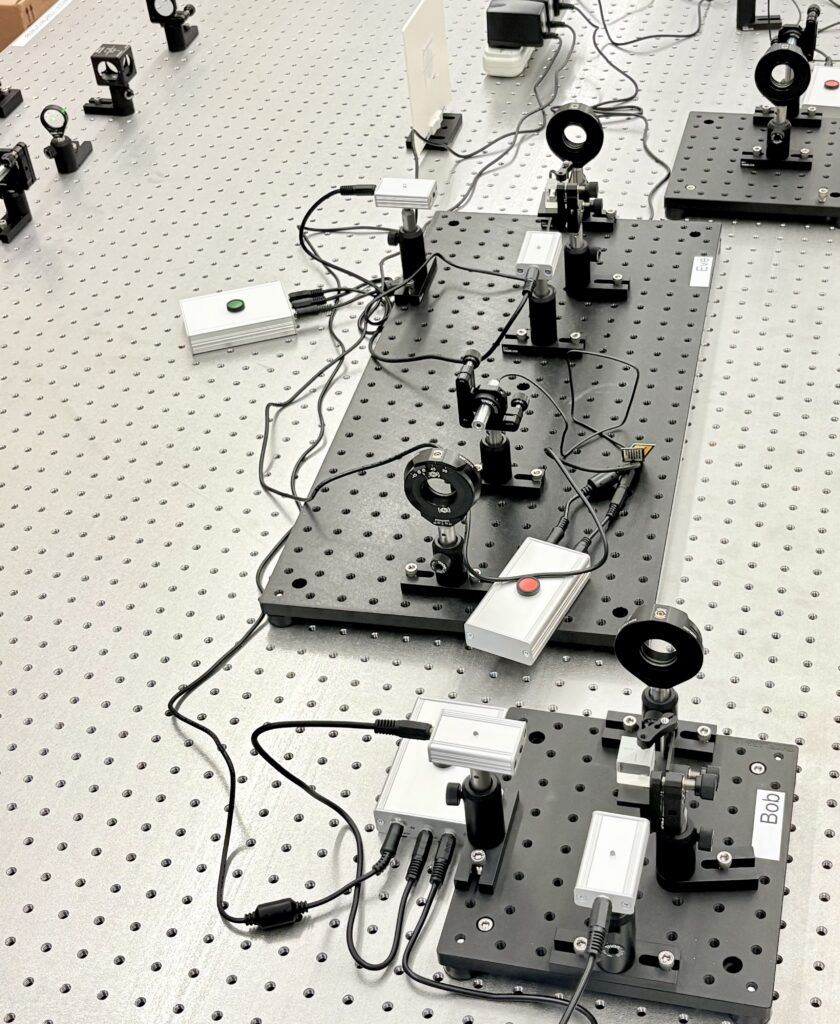
Pictured: A Thorlabs Quantum Cryptography kit (right) and a Michelson interferometer kit (left), which Emily Griffith Quantum Technician students will use for hands-on learning to reinforce theoretical concepts.
A Network of Partners in Quantum
Emily Griffith is just one of several institutions shaping the workforce and development of quantum technology in Colorado and the Mountain West. The Quantum Technician program, led by Ph.D. physicist and research scientist Dr. Boaz Nash, was modeled after a similar, existing Central New Mexico Community College Ingenuity (CNM-I) Deep Dive course. As program manager of Emily Griffith’s Quantum Technician program, Nash plans to build on that existing curriculum to create opportunities and further supply the region’s quantum workforce with capable technicians trained in cutting-edge technologies.
Emily Griffith has also joined a vast network of passionate developers mapping the future of quantum in Colorado. Elevate Quantum is a Colorado-based tech hub designated by the U.S. Department of Commerce’s Economic Development Administration with the mission to accelerate the commercialization of quantum technology. It’s home to a consortium of more than 100 partners that range from companies on the forefront of quantum manufacturing, computing, sensing and networking technologies to educational institutions, investors, and local governments and associations providing the resources for growth. Building a workforce of technicians conversant in quantum technology is key to the entire consortium’s goal.
To help shape the Quantum Technician program curriculum, Emily Griffith is consulting with colleges and universities including Front Range Community College, CU Boulder and Colorado School of Mines. Along with strengthening the curriculum, Emily Griffith hopes to outline more formal pathways for students who want to pursue higher education in the quantum field.
As the Quantum Technician program continues to adapt to changes and advances in the industry, leading quantum companies will help review curriculum and equipment and provide input based on workforce needs as part of a program advisory board, ensuring students are always prepared with the most up-to-date training in a rapidly changing field.
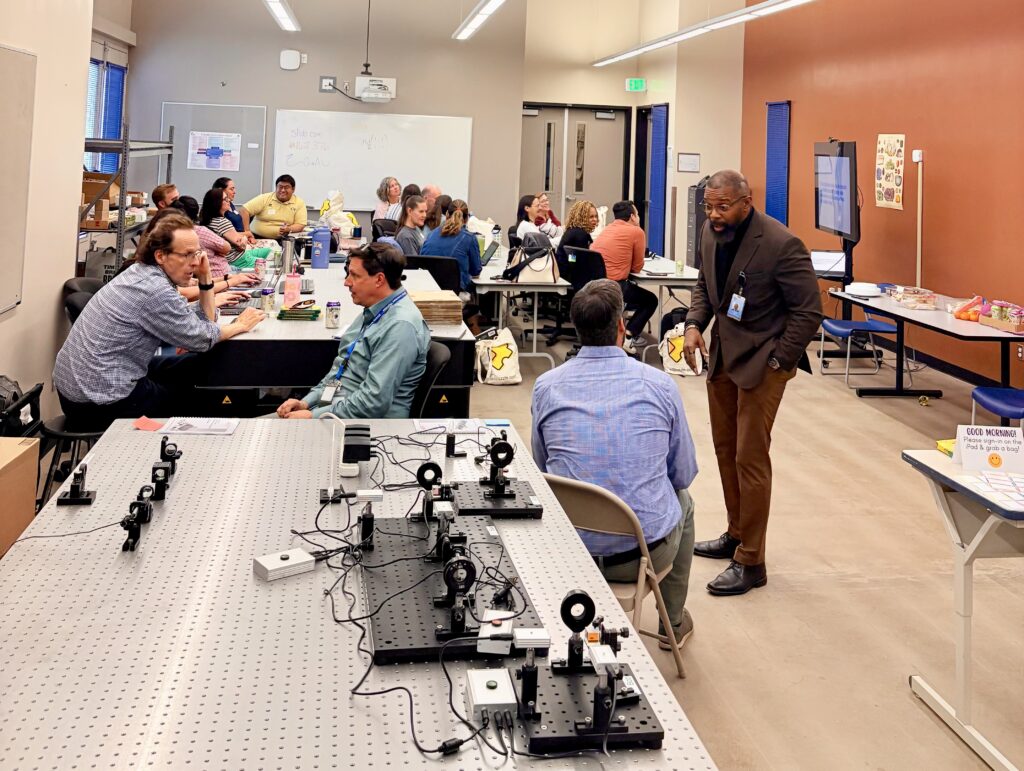
Participants in QCaMP—a professional development program introducing K-12 educators to quantum information science—at Emily Griffith Technical College’s Osage campus. Dr. Charles Tahan (standing, right) leads the session, while Dr. Boaz Nash (seated, second from left) will head the college’s upcoming Quantum Technician program.
Your Quantum Career Begins Here
Whether you’re just out of high school or seeking a career change in an exciting, growing industry, our team is here to help you every step of the way. Quantum Technician is an intensive 12-week program designed as an affordable pathway to a promising career in a rapidly developing field. Scholarships will be available, making the program an even more cost-effective option for students of many backgrounds.
To learn more about the program and start your quantum journey, fill out an interest form and we’ll get in touch.
FAQs
Q: Do I need to understand quantum physics to enroll in this program?
A: No prior background in advanced physics or quantum mechanics is required. Students should have a practical understanding of computers.
Q: Do I need to be a math person?
A: No, but willingness to learn math is necessary. Basic mathematical concepts will be augmented with hands-on exercises to facilitate learning throughout the program.
Q: What skills are needed to work in the quantum industry?
A: Passion and excitement about the quantum industry; good communication, documentation and tactile skills; the ability to collaborate in a team environment; and strong attention to detail. Students should also be prepared to adapt to a new and evolving industry.
Q: What type of person might be interested in the Quantum Technician program?
A: Anyone who is excited about quantum! Students might be recent high school graduates just starting their career or someone later in their career who wants to reskill to find a higher paying job or be part of a burgeoning field. They could be computer programmers or people who are already working in a trade where they use their hands.
Q: Do I need a college degree to become a quantum technician?
A: No, you do not need a college or advanced degree to become a quantum technician. This certificate program provides the technical training required to enter the field or continue on a pathway to higher education.